top of page
Search

by Irene Cooper

I went searching for a recent tweet by a writer I admire, and couldn’t find it. Fittingly, the tweet mused on the suggestion that everyone has been writing the same human dramedies—the same histories of trauma and triumph—for eons, each from a slightly different perspective. As with many tweets, it can be read (at the very least) in two ways: that there is nothing new under the sun, and we (especially we who fancy ourselves creative) only replicate rather than innovate; conversely, that we are indeed snowflakes, made up of the same stuff but in awesome, infinite arrangement. Additional possibilities abound, of course. Some are cheerier than others.


I say fitting, too—that I couldn’t locate the thought in the 24/7 textual Indie 500 that is Twitter—because Michael and I will this week head to the annual conference of the Association of Writers and Writing Programs (AWP) to rub patched elbows with twelve thousand of our fellow writers. Twelve thousand people will sit on and in front of panels that will discuss writing concerns including voice, genre, education, and the ever-shifting landscape of the publishing industry. As both writers and instructors of The Forge, a creative writing program, we have a good deal of skin in the game. This year our Superbowl is in Seattle, a virtual home field.


Once upon a time I had a conversation with a judge in Reno, Nevada, a place where you might as well tell the truth. It was a friendly chat, nothing law-bound, in which I’d said there was a time I thought I’d be a public defense attorney in NYC. He said public defense was a hard row to hoe. He himself had run a notoriously successful firm with scandalously wealthy clients. He suggested I go back to school. “There is always room at the top,” he said.


I recognized the quote—purportedly a response from Daniel Webster when he was cautioned against becoming a lawyer—he was advised (by people who meant well, we shall presume), that the field, in the early nineteenth century, was saturated. The idea of a “top,” even to the synapses in my young-twenties brain, even in 1986—the year before Wall Street glamorized rather than vilified abject greed—felt wonky. Wonky, but prevailing, like a March wind whipping the Nebraska plains.


It would be another three decades or so before dancer, choreographer, educator, and visionary Liz Lerman would give me language for my ambivalence regarding “top” (and the implied “bottom”). Lerman founded and developed Critical Response Process, a dialogic alternative to creative workshop models that traditionally silence the artist. She also wrote a collection of essays called, Hiking the Horizontal, which her website says, “offers readers a gentle manifesto to bring a horizontal focus to bear on a hierarchical world.” Neither a top, nor a bottom, then, but a horizon of indiscernible end. Of boundless access and possibility.


AWP is a curious event: Twelve thousand introverts crushed together under one roof, twelve thousand hearts pounding with ambition, twelve thousand and more perspectives on a single moment. No recollection or interpretation will be the same as another.


This AWP, I think I’ll leave the sky to the stars, is what I’m getting at. I want to listen to some stories, marvel at the poets, and stare across Elliott Bay, through the inevitable mist, to the infinite horizon, where I know there is room for me and my work.



by Mike Cooper


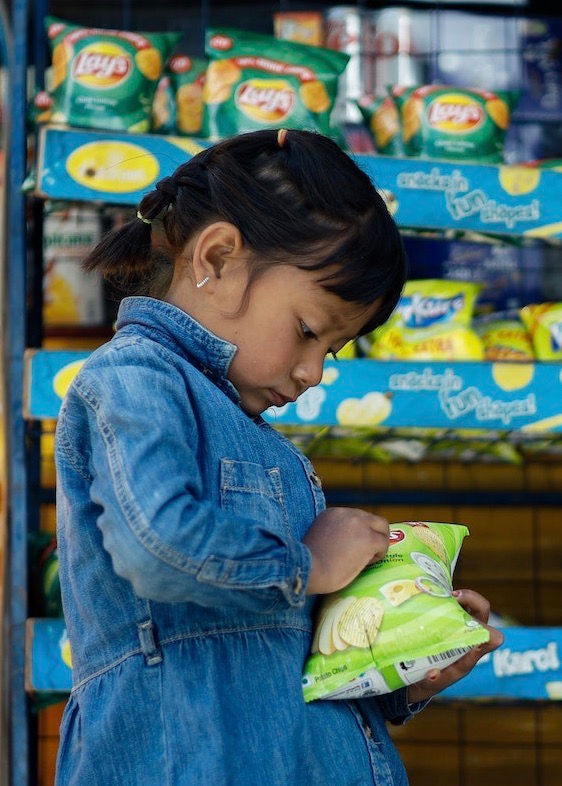
The bottlenose dolphins in Shark Bay of Western Australia chase fish into the empty shells of giant sea snails, bring the shells to the surface, and shake the fish into their mouths—the way we’d finish off the crumbs in the bottom of a bag of chips. And it’s not just one of them, it’s all of them.


Dolphins, like humans, are collaborative and cooperative. It’s how we not only survive, but learn and grow and evolve. One dolphin, let’s call them Terry, apparently came upon this tactic, and pretty soon everybody was doing it, and likely they improved upon the method as a group. Hey, try this. Check it out.


If you’re reading this, you’re not only a human, but you’re also probably a writer (even if you don’t admit it): one of those people for whom writing fills a void, provides a spark, or helps you to understand all of this. And hopefully you are fortunate enough to have the time and the wherewithal to put pen to paper (or fingers to keyboard), even if it’s in the wee hours of the morning before the chickens wake up or late at night long after the cows have gone to bed. Not all of us are writers, which is not to imply that you are any better or worse than anyone else; it just happens to be your way.


There have been lots of writers, from the first of us to draw in the dirt to those who were forced to write in secret or under a different name to all the greats who have filled all our libraries and the internet itself. We have learned from each other. We have grown and evolved.


You can write alone—most of us do. You can fill journals or computer memory with millions of words. You can fill your void, find that spark, figure all of this out. And you can do it entirely on your own. But you might never figure out how to chase a fish into a snail shell for an easy dinner.


That’s where writing groups and classes and writing programs and writing buddies come in. Other writers help us with additional skills, feedback, perspective, ideas, motivation, accountability, encouragement, refinement, process, and accountability. Yes, I said accountability twice. So check out a writing program like The Forge. Go to classes at your library. Find online classes or readings or lectures. Join a Writers Guild. Find a buddy who likes to write. Find a bunch of buddies and make a writing group. And, even if you’re a groundbreaking innovator like Terry the dolphin, you can always learn and grow and evolve. You’ll be glad you did.


by Ellen Santasiero

Photo by Ajin


Last month I participated in a twenty-four hour “playfest,” which meant I agreed to write a ten-minute play in eight hours, overnight. I know. Crazy is as crazy does.


Of all the positive outcomes of that experience, one stands out. It was afterward when one of the actors in my play said, “I get what you were doing with the bag of chips.” (O, to be understood!)


The play is set at a Very High Tech startup that caters to its Millennial employees’ basic needs for catered lunches, on site acupuncture, and egg-freezing.


So, my protagonist, twenty-nine-year-old Nate, has on his desk his drink of choice and a bag of chips. Nate is a brilliant coder and team leader working on a Very Important Project that will change the world, utterly. Except he’s failing. He can’t get the program to run. So the Big People Upstairs (who are, of course, the same age as Nate) add a new member to Nate’s team: a boy in his late teens, a Wunderkind, just as Nate once was.


At first, Nate resists the young coder and his fresh ideas, but eventually he accepts that the kid is, in this case, a better coder than Nate himself, and that he should and will capitulate to the kid’s superior knowledge and skill. That’s all well and good for Nate, but how does the audience know that he’s had this internal realization?


Enter bag of chips.


Before Nate asks the kid, “Whaddya got?” he crosses the room with the bag of chips and—wait for it—proffers the open bag to the boy so he can reach in for a handful.


You get the picture. A crunchy olive branch, a salty peace offering, that kind of thing.


Even in the mind-numbing novel of ideas, The Magic Mountain by Thomas Mann, which I’m reading right now for reasons best explored in a different post, objects sometimes do the talking. The story’s protagonist, Hans, loves to smoke a cigar after meals. He’s addicted to cigars, in fact. One of the tiny internal shifts that Hans experiences—one that will allow him to stay at the sanatorium in Switzerland and not return to his former life at sea level—is made visible to the reader when Hans notices that the cigar doesn’t taste as good as it usually does (it tastes bad, even), and tosses the cigar into the edelweiss, never to be seen again.


“No ideas but in things,” said William Carlos Williams in 1927, which is just another way to say, no things in your story without a job to do.


Objects are just waiting for us to give them a job to do in our stories. And, they’ll work for free, with no expectation of lunch, catered or otherwise.


bottom of page